Each macro area above is assessed through TIRF’s evaluation criteria, using a series of guiding questions to conduct the review. Reviewers rate responses to each evaluation criterion in each macro area on a four-point scale as follows:
- 4 = Exceeds Expectations
- 3 = Meets Expectations
- 2 = Approaches Expectations
- 1 = Does Not Meet Expectations/No Data
TIRF can also customize the TIRF QA evaluation criteria, if needed, based on institutional goals, learner demographics, and the local context.
TIRF QA Review Process
Initial Review
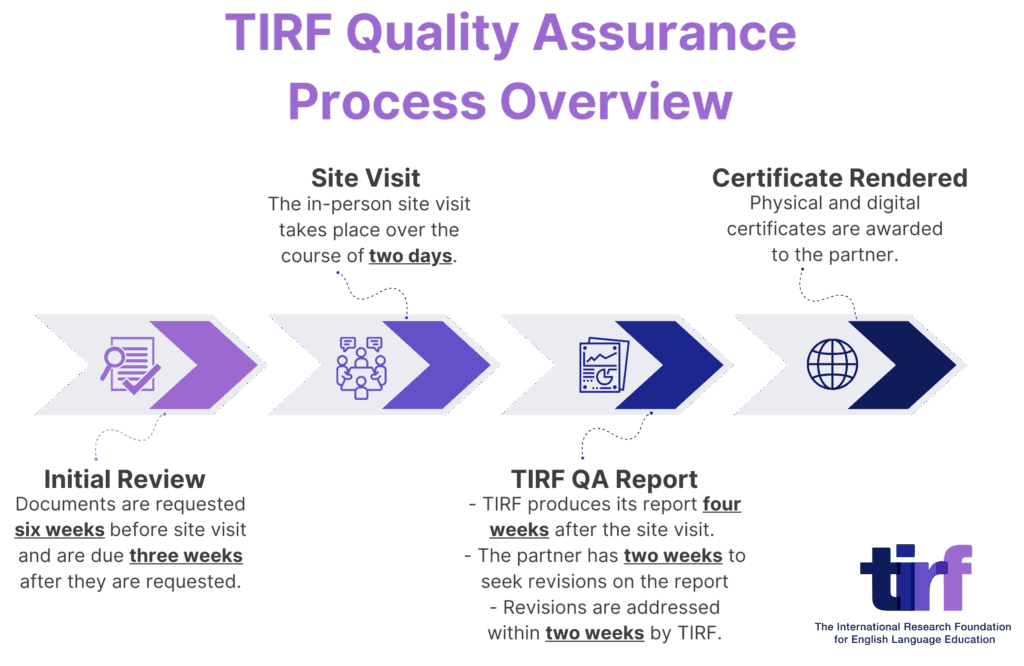
To begin the review process, TIRF conducts an initial consultation with and assessment of the needs of the institution. Next, TIRF shares a checklist of the required documents to be reviewed before the site visit, as well as offers a schedule for meetings and interviews with the various stakeholders during the on-site review. A timeline for the entire review is shared at this time.
Evaluation Methodologies
Input from teachers, administrators, students, parents, and/or other stakeholders is required. TIRF collects information through document reviews, interviews, surveys, and classroom observations.
Site Visit
TIRF provides in-person site visits of institutions for on-the-ground evaluations reviewing the facilities, teacher practices, classroom performance, staffing, and so on. The in-person site visit takes place over a two-day period. TIRF can also provide virtual reviews where applicable.
Site Reviewers
The TIRF review team consists of two TIRF experts and one project manager. The pool of TIRF experts are drawn from TIRF Trustees and other experts identified by the Foundation.
TIRF QA Report
TIRF provides an in-depth report that includes detailed findings and recommendations for improvement. An action plan based on the recommendations made is included along with additional resources that help strengthen outcomes after the review is completed.
TIRF QA Certificate
A physical certificate will be provided to partners who undergo the review and receive the “Exceeding Expectations” outcome. The physical award is an important element of this service, so that clients are able to showcase their successful review. A digital certificate will also be provided to partners for placement on clients’ websites, social media accounts, and other forms of communications. The certificate will be valid for three years and will be noted on the plaque and digital badge. After this period of time, clients will be encouraged to undergo the review again. Doing so helps create a pathway toward continuous improvement for clients.