


Empowering Learners & Educators: English for Career Readiness
In today’s rapidly evolving job market, English proficiency has become a crucial asset for career success. Whether in business, technology, healthcare, or academia, professionals around the world rely on English to collaborate, innovate, and communicate effectively.
Context: The demand for English in the workplace extends beyond technical knowledge. Research shows that employers highly value soft skills—such as communication, problem-solving, and adaptability—alongside language proficiency. Equipping learners with both linguistic and interpersonal skills is essential for their long-term career development.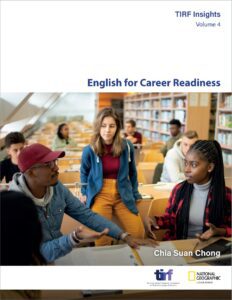
Dive in (one-minute read)
What the Research Says: English is the world’s predominant lingua franca, with millions of professionals using it daily to engage in global business and academic discourse. However, success in the workplace requires more than fluency; it calls for intercultural competence, critical thinking, and the ability to collaborate across diverse teams.
Why it Matters: As industries evolve, so do employer expectations. Professionals need to navigate complex, multicultural work environments where effective communication is key. Integrating soft skills into English language education prepares learners to meet these challenges and thrive in their careers.
What’s Next: Governments, businesses, and educators increasingly recognize the importance of embedding career readiness into English language instruction. Schools and training programs are adapting curricula to develop not only language proficiency but also the soft skills essential for professional success.
Read the Report: In this latest TIRF Insights paper from TIRF and National Geographic Learning, author Chia Suan Chong explores the intersection of English proficiency and career readiness. She highlights how educators can integrate soft skills into language learning to better prepare students for the workforce. Complete the form at the link below to download the paper.
.custom-popup { display: none; position: fixed; top: 0; left: 0; width: 100%; height: 100%; background-color: rgba(0, 0, 0, 0.5); z-index: 9999; } .custom-popup-content { position: absolute; left: 50%; transform: translateX(-50%); max-height: 60%; overflow-y: auto; background-color: #fff; padding: 60px 25px; border-radius: 5px; box-shadow: 0 0 10px rgba(0, 0, 0, 0.5); margin-top: 250px; width: 800px; max-width: 100%; } .close-popup { position: absolute; top: 10px; right: 10px; cursor: pointer; background: #7136b0; color: #fff; width: 35px; text-align: center; border: 1px solid; border-radius: 10px; font-size: 24px; height: 35px; line-height: 35px; } .close-popup:hover { background: #16163f; } button.popup_btn_text { color: #9c69d1; text-decoration: underline; } button.popup_btn_text:hover { color: #fff; text-decoration: unset; }
Calls to Action: Use these discussion questions to explore how career readiness can be integrated into English language education:
- How does English proficiency impact career opportunities in different industries?
- What soft skills are most valuable for professionals in global workplaces? How can these be cultivated in English language learning?
- How can educators design lessons that blend language development with real-world communication and problem-solving skills?
- What challenges do learners face when using English in professional settings? How can schools and training programs better support them?
- How can employers and educators collaborate to ensure that English language education aligns with workforce needs?
About TIRF Insights: “TIRF Insights” profiles recent research in the field of English Language Teaching (ELT) in a practical and accessible format. Our publications are written for parents, teachers, school leaders, and all student advocates who want to review recent educational trends in a nonacademic way. This paper on English for Career Readiness is available in English, Arabic, Chinese, and Spanish.
TIRF Insights: Social and Emotional Learning is available in four languages: Arabic, Chinese (Simplified), English, and Spanish.
This paper, authored by Katherine (Kath) Stannett, investigates social and emotional learning (SEL) against the backdrop of the COVID-19 pandemic and consequent disrupted education and learning loss.
Recent research suggests that the COVID-19 pandemic has led to disrupted education, learning loss, and the wide-scale use of hybrid and online teaching and learning. The pandemic has also revealed and underscored a need to address not only stude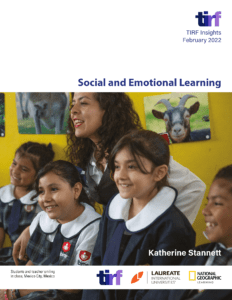 nts’ academic skills but also their social and emotional skills.
This paper is made available to the public for free. Use these links to access the publication:
TIRF is pleased to have worked with author Kath Stannett, an England-based teacher trainer and materials writer, and in collaboration with Laureate International Universities and National Geographic Learning, to produce this first paper in the “TIRF Insights” series. This series was formerly known as “TIRF Language Education in Review.”
Via “TIRF Insights,” the Foundation profiles recent research in the field of English Language Teaching in a practical and accessible format. Our publication is written for parents, teachers, school leaders, and all student advocates who want to review recent educational trends in a nonacademic way.
Click here to download the English version of TIRF Insights: Social Emotional Learning.
Beyond the Classroom: Mobile Learning the Wider World
For the main page, click here.
 Ken Beatty, Professor of TESOL, Anaheim University
Executive Summary: Mobile learning has extended opportunities for making teaching and learning available beyond the traditional classroom. Associated technologies, software programs, and internet access have enfranchised many students who previously had little access to quality teaching. However, a paradigm shift has occurred in which learners are turning to new mobile learning opportunities to supplant traditional teaching as virtual extensions of earlier self-help books, phrase books, and audio-based language learning programs. Audio translation apps, augmented reality, and just-in-time learning approaches are providing alternatives to those with neither access nor time to learn a language. This paper examines the theoretical underpinnings of a range of technologies and applications, contrasting them with the traditional classroom and imagining the future of mobile language teaching and learning and the impact it will have on policymakers, teachers, employers, and learners.
Discussion of this paper provided by: Leonardo A. Mercado, Academic Director, Instituto Cultural Peruano Norteamericano (ICPNA), Peru
Read Leonardo A. Mercado’s discussion of this paper by clicking here.
Discussion of this paper provided by: Joyce Wangia, Director, Centre for Institutional Based Programmes, Kenyatta University, Kenya
Read Joyce Wangia’s discussion of this paper by clicking here.
Terms of Use and Disclaimer: TIRF is providing this information as a service to our constituents, and no endorsement by TIRF of the ideas presented in this paper is intended or implied. The information is made available free of charge and may be shared, with proper attribution. However, the papers may not be reprinted without express written permission from TIRF.

Mobile Learning for Languages: Can the Past Speak to the Future?
For the main paper, click here.
 John Traxler, Professor of Mobile Learning and Learning Lab Director, University of Wolverhampton
Executive Summary: This paper explores the past decade of mobile learning projects, policies, research, and conceptualising and asks about its relevance to the future as it might apply to language learning. The paper provides a very broad categorization of mobile learning in order to identify pedagogic possibilities for language learning, but it moves on to ask about the changing nature and authority of language and learning. There are nevertheless practical lessons to be learnt.
Discussion of this paper provided by: Shannon Sauro, Associate Professor, Department of Culture, Languages & Media, Malmö University, Sweden
Read the discussion by clicking here.
Discussion of this paper provided by: David L. Chiesa, US Department of State – Senior English Language Fellow, Coordinator, Beijing Normal University, China
Read the discussion by clicking here.
Terms of Use and Disclaimer: TIRF is providing this information as a service to our constituents, and no endorsement by TIRF of the ideas presented in this paper is intended or implied. The information is made available free of charge and may be shared, with proper attribution. However, the papers may not be reprinted without express written permission from TIRF.
Confronting Climate Change Education in ELT
Our world faces a number of challenges, and for many people, the most serious global issue is climate change, driven by the unsustainable use of the planet’s resources. But what does climate change have to do with English language teaching (ELT)?
At first glance, ELT might have little to do with environmental concerns. However, there are convincing reasons for ELT professionals to integrate sustainability into their teaching.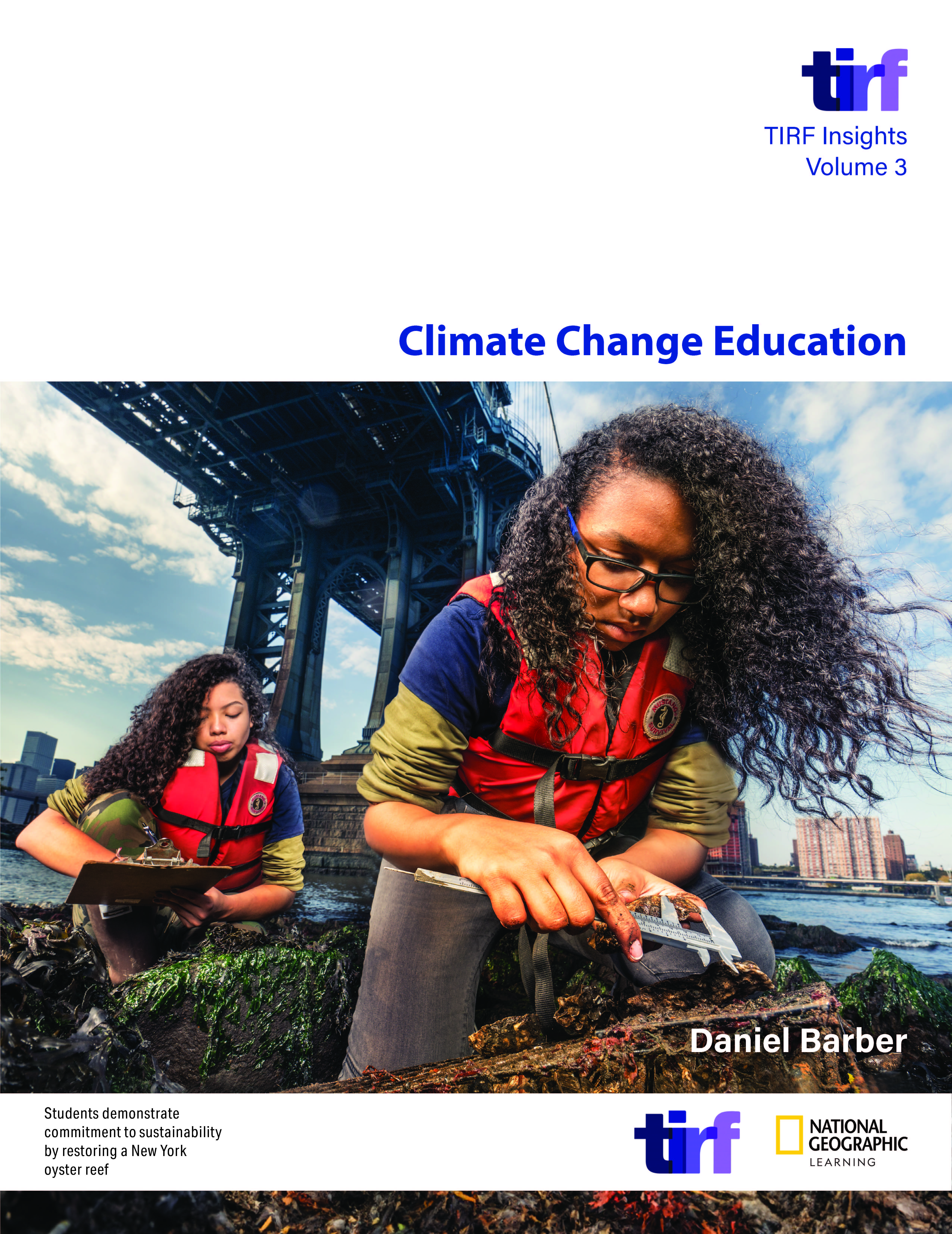
Context: As our world is globally interconnected, many national and international education frameworks underscore the need for young people to become global citizens who take action. Pioneering educators in the field of sustainable development are leading the way in preparing young people to become the global citizens of the future.
Climate Change Education, or CCE, is the education sector’s response to the growing global concern for global warming. Sustainability is steadily becoming a focus of education in science syllabi, through student-based action, and as part of national curricula.
Implications: ELT instructors can play a key role in helping students develop language skills to participate in the climate change debate. Preparing learners to be a part of this ongoing conversation and to act with informed awareness is the very basis of education. Bringing climate change discussions into the ELT classroom will help students develop their voices for sustainability discussions outside of class.
What’s Next: The science of global warming is clear. As climate change awareness increases globally, we can expect to see a much greater focus on climate action in all areas of life, including English language education.
Read the Report: In this report from TIRF and National Geographic Learning (NGL), author Daniel Barber details how stakeholders in ELT are confronting issues involved in CCE. This paper is available in Arabic, Chinese (Simplified), English, and Spanish. Complete the form at the following link to download the paper:
.custom-popup { display: none; position: fixed; top: 0; left: 0; width: 100%; height: 100%; background-color: rgba(0, 0, 0, 0.5); z-index: 9999; } .custom-popup-content { position: absolute; left: 50%; transform: translateX(-50%); max-height: 60%; overflow-y: auto; background-color: #fff; padding: 60px 25px; border-radius: 5px; box-shadow: 0 0 10px rgba(0, 0, 0, 0.5); margin-top: 250px; width: 800px; max-width: 100%; } .close-popup { position: absolute; top: 10px; right: 10px; cursor: pointer; background: #7136b0; color: #fff; width: 35px; text-align: center; border: 1px solid; border-radius: 10px; font-size: 24px; height: 35px; line-height: 35px; } .close-popup:hover { background: #16163f; } button.popup_btn_text { color: #9c69d1; text-decoration: underline; } button.popup_btn_text:hover { color: #fff; text-decoration: unset; }
About the “TIRF Insights” Series: The “TIRF Insights” Series profiles recent research in the field of English Language Teaching (ELT) in a practical and accessible format. Our publications are written for parents, teachers, school leaders, and all student advocates who want to review recent educational trends in a nonacademic way. TIRF is pleased to be working with NGL on this important endeavor.
Calls to Action: To promote further exploration and discussion for you and your colleagues on the issues raised in the TIRF Insights: Climate Change Education paper, here are some questions to guide a conversation around the topic of CCE.
- What role does climate change currently play in our students’ lives? How can we support students in learning more in a supportive atmosphere?
- What are the most relevant and impactful environmental issues that affect the learners’ local area and home country? How can we raise awareness of these issues and the part our leaners might play in tackling them?
- Which cultural factors arise when discussing climate change in our classrooms? Is there more we can do to support one another to handle these cultural sensitivities?
- What misgivings do we have regarding the adoption of CCE? Lack of training? Uncertainty around content that could be seen as political? Our own climate anxiety? What support could be helpful in overcoming these obstacles?
- What climate education projects would our students and our school like to take part in? What actions might benefit students, parents, the school, and the local community.



Re-skilling Language Learners for a Mobile World
For the main paper, click here.
 Agnes Kukulska-Hulme, Professor of Learning Technology and Communication, The Open University
Executive Summary: Ubiquitous access to mobile phones and other portable devices means that language learning increasingly straddles classroom-based learning and learning outside the classroom, in virtual spaces and out in the world. We know from studies of emergent learner-led practices that foreign language study can be enriched through easy access to resources selected to suit individual interests or needs. Yet learners’ choices seem largely determined by what they happen to come across, rather than knowledge about which language skills are best improved through mobile learning. Existing mobile applications often fail to exploit connections between life and learning. This paper suggests which language skills can be enhanced through mobile learning and how learner-technology interaction supports that development, particularly opportunities for learners to extend or practice their communication with others. The paper also suggests that new skills may be required in relation to the next generation of wearable devices and increasingly instrumented, technology-rich surroundings where use of mobile technology integrates with other tools, resources, and social networks that continue to challenge traditional knowledge and skills.
Discussion of this paper provided by: Richard Boyum, University Partnership and Grants Evaluation Coordinator for Afghanistan and Pakistan, US State Department, USA
Read the discussion by clicking here.
Discussion of this paper provided by: Sky Lantz-Wagner, ESL Instructor, University of Dayton, USA
Read the discussion by clicking here.
Terms of Use and Disclaimer: TIRF is providing this information as a service to our constituents, and no endorsement by TIRF of the ideas presented in this paper is intended or implied. The information is made available free of charge and may be shared, with proper attribution. However, the papers may not be reprinted without express written permission from TIRF.
Some Emerging Principles for Mobile-assisted Language Learning
For the main paper, click here.
Glenn Stockwell, Professor, Waseda University
Philip Hubbard, Senior Lecturer and Director of English for Foreign Students, Stanford University Language Center
Executive Summary: The steadily increasing access to sophisticated but affordable portable technologies over the past several years has brought with it a body of research into using these technologies for learning in both formal and informal contexts. It is not surprising, then, that language teachers have also adopted mobile technologies into their individual teaching and learning contexts. This paper first examines recent studies from the mobile-assisted language learning (MALL) literature, exploring the issues that emerge from this body of research through a framework distinguishing physical, pedagogical, and psycho-social dimensions. Recognizing not only the contributions but also the limitations of existing MALL literature, it then identifies a number of findings from the closely allied fields of mobile learning (ML) and computer-assisted language learning (CALL) that can inform both research and practice in MALL. Drawing from all three sources (MALL, ML, and CALL), the paper proposes ten general principles to guide teachers, learners, administrators, employers, and other stakeholders in the challenge of effectively integrating mobile devices and tasks into language learning environments. The paper concludes with a case study showing how each of the principles described have been applied in an actual mobile language learning context.
 Discussion of this paper provided by: Tarana Patel, Founder & Educator, learnEd, India
Read the discussion by clicking here.
Discussion of this paper provided by: Simone Smala, Professor, The University of Queensland, Brisbane, Australia
Read the discussion by clicking here.
Terms of Use and Disclaimer: TIRF is providing this information as a service to our constituents, and no endorsement by TIRF of the ideas presented in this paper is intended or implied. The information is made available free of charge and may be shared, with proper attribution. However, the papers may not be reprinted without express written permission from TIRF.